Don't miss our holiday offer - up to 50% OFF!
Tangent Theta Riflescopes
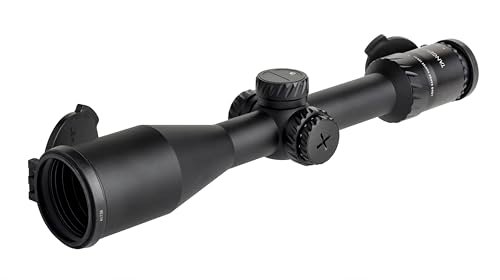
The scope on a precision rifle either works or it doesn’t. At 1,000 yards — in a PRS match, on an elk at last light, or somewhere that matters more than either of those — “close enough” isn’t a category. Tangent Theta builds rifle telescopes for people who understand that. Every scope is assembled and individually function-tested in Halifax, Nova Scotia, by a team that includes optical designers, mechanical engineers, and international-class long-range marksmen who use what they build.

Hand-Assembled and Function-Tested in Halifax
Every scope leaves Halifax individually tested — not batch-inspected. Consistency across units isn’t hoped for; it’s verified.
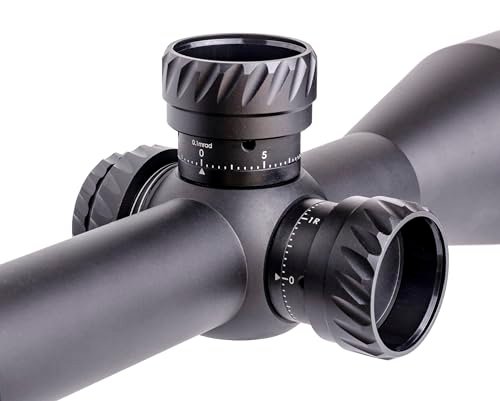
TOOL-LESS RE-ZERO® — US Patent #10,591,253
Reset your zero in the field without a coin, screwdriver, or the 90 seconds you don’t have.
Limited Lifetime Warranty on Every Scope
Each Tangent Theta riflescope ships with a limited lifetime manufacturer warranty — and a customer service record the long-range community notices.
Among top-performing scopes in precision rifle competition, Tangent Theta grew from 4% to 20% representation in five years. That’s not marketing data. That’s equipment choice under pressure.
Tangent Theta Riflescopes
The lineup is smaller than most competitors’ and intentionally so. Each model has a specific use case. Match the scope to the shot — not to a marketing tier.

Built specifically for backcountry hunting. The 30mm tube keeps weight down and ring selection simple, the AIF (Auto Isolation Feature) protects your settings when the rifle is packed or cased, and the reticle options — MRAD hunting reticle and Gen 3 XR — are chosen for low-light readability at the distances where mountain shots happen.
Configurations: MRAD Reticle | Gen 3 XR Reticle

The entry point into the TT optical system — and a meaningful distinction from “entry-level.” The TT315M shares the same glass standard as the Professional series, delivers precise adjustment mechanisms with zero stops and mechanical revolution and windage direction indicators, and is designed for police and security marksmen who need the optical performance without the full Professional-series feature set. The 30mm tube is an asset for US buyers sourcing rings.
Configuration: Gen 3 XR Reticle

The compact Professional. Everything that defines the TT525P — TOOL-LESS RE-ZERO®, precise tactile turret response, 34mm tube, hand-built in Halifax — in a 3–15× format suited to law enforcement precision work, hunting rifles, and competitors who prefer lower maximum magnification. The Gen 3 XR is accurate and precise above 10×. The Horus Tremor 3 configuration is for personnel already trained on that system.
Configurations: Gen 3 XR Reticle | Horus Tremor 3 Reticle

The reference scope. When experienced shooters in long-range forums compare alpha-tier optics, the TT525P is the scope they’re measured against. The 34mm tube, 56mm objective, and 5–25× magnification range cover PRS competition, law enforcement precision work, and extended-range hunting with the same optical standard. Available in standard and AIF turret configurations, in Black and Coyote Brown, with six reticle options including the only MOA-click configuration (Gen 2 MoA-ER) in the entire Tangent Theta lineup.
Configurations: Gen 2 XR Reticle | Gen 3 XR Reticle | Gen 3 XR Fine Reticle | Horus Tremor 3 Reticle | JTAC Reticle | Gen 2 MoA-ER Reticle
Available colors: Black | Coyote Brown
Turret options: Standard | AIF (Auto Isolation Feature)

The newest model in the lineup and, by the account of reviewers who have looked through all of them, the most optically resolving. The TT735P delivers 35× magnification for ELR engagements and demanding PRS stages, parallaxes down to 10 meters — relevant for close-in competition stages the TT525P can’t match — and is 24mm shorter than the 5–25× models despite the higher magnification ceiling. The 36mm tube requires specific mounts; see the Mount Compatibility Guide below.
Configurations: Gen 3 XR Fine Reticle | JTAC Reticle

Accessories — Throw Lever Kit, CADEX Ring Kits & Sunshade
Four accessories built to spec for specific TT models — not universal fits, not afterthought additions. The Throw Lever Kit mounts on the TT315P and TT525P for rapid magnification changes without breaking your eye position. CADEX Scope Ring Kits are available in 34mm for the TT315P and TT525P, and 36mm for the TT735P — each with an integrated recoil lug, bubble level, and the correct rail height for the corresponding model. The 4.6″ Stackable Sunshade fits the 56mm objective models (TT525P and TT735P) with a profiled interior for glare reduction and a stackable design for extended coverage (currently unavailable, no restock date confirmed). Compatibility is model-specific throughout; verify the fit before ordering.
What TOOL-LESS RE-ZERO® Actually Does?
Most shooters who’ve read about Tangent Theta have seen the phrase. Fewer have a clear picture of the mechanism — what it does step by step, why it required a US patent, and what the practical difference is at the range or in the field.
Here’s what it solves. Standard precision riflescopes require a coin, a screwdriver, or a proprietary tool to reset the external turret indicator to zero after you’ve dialed significant elevation. In field conditions — cold fingers, low light, a position where your kit isn’t laid out neatly in front of you — hunting for that tool costs time and attention you may not have. Military and law enforcement personnel understand this problem more acutely than most.
The TOOL-LESS RE-ZERO® system (US Patent #10,591,253) addresses it mechanically. After zeroing your rifle and dialing in elevation, here’s the sequence: loosen the turret cap by hand — three turns, no tools — return the external turret indicator to the zero position, then re-tighten by hand. That’s it. The locking force applied by hand is sufficient. You don’t need a coin. You don’t need a screwdriver. You don’t need to carry a battery cap tool for this specific task.
The reason this matters extends beyond the convenience argument. Any time you’re resetting zero — switching barrels, adjusting for a different load, returning to a cold-bore zero after field work — the process needs to be reliable and fast enough that it doesn’t become a variable. On a TT525P or TT315P with AIF turrets, you can confirm zero in seconds and know the external indicator is accurate. That’s the operational case for a mechanism that, on the surface, sounds like it might just be a quality-of-life feature.
One detail worth knowing: the TOOL-LESS RE-ZERO® is present on all Professional series models (TT315P, TT525P, TT735P). It is not available on the TT315M — which is designed for intermediate-range police and security applications where the turret feature set is intentionally reduced. If this mechanism is part of your decision, verify the model before ordering.
The Second Revolution Indicator works alongside it. A small metal pin protrudes from the elevation turret when you pass 15 MRAD of travel into the second revolution. At 1,200+ yards, inadvertently dialing the wrong revolution translates to a miss measured in feet. The indicator makes it physically visible — not something you have to track mentally under match conditions.
Standard Turrets vs. AIF Turrets on the TT525P
The TT525P is available in two turret configurations. Both use the same TOOL-LESS RE-ZERO® mechanism, the same 0.1 MRAD click value, the same tactile response. The difference is one specific mechanical layer — and whether you need it depends entirely on how you’re running the scope.
Standard turrets engage fully on every input. Click the elevation, it moves. There’s no isolation collar — what you touch is what adjusts. For most competition shooters and hunters this is exactly what you want. Direct feedback, no intermediate step, full engagement every time.
AIF — Auto Isolation Feature — adds a collar that effectively locks the turret against accidental input when it’s in the closed position. You click it open when you intend to adjust, make your elevation change, then close it. The setting is protected until you deliberately open it again. The mechanism allows rapid access to elevation and windage when you need it, while protecting your dialed settings when you don’t.
Who actually needs AIF? Military and law enforcement personnel who operate in environments where a scope mounted on a rifle in transit — in a vehicle, slung during movement, staged in a case with significant elevation already dialed — cannot afford inadvertent zero loss. The AIF configuration was developed for that operational reality. It’s also relevant for hunters who pack a rifle with elevation dialed for a specific distance and can’t have the turret move during the approach.
For PRS competition, where you’re actively dialing between stages and want unobstructed access, the standard configuration is the right call. The AIF adds a step to every adjustment. In a timed stage environment that step costs something.
The price difference: AIF-configured TT525Ps run approximately $340–$460 higher than equivalent standard-turret configurations, depending on reticle and color. Both carry the same limited lifetime warranty and the same optical standard. The choice is mechanical and operational — not a quality tier.
Tangent Theta Reticle Selection Guide — Which One Is Right for Your Application?
Reticle selection is the decision most likely to result in a return at this price point. The forum record on this is clear. Before choosing a configuration, match the reticle to your primary use — not to what looks impressive on paper.
Gen 3 XR Reticle
Primary use: Precision rifle competition (PRS/NRL), law enforcement precision work, long-range target shooting above 10× magnification.
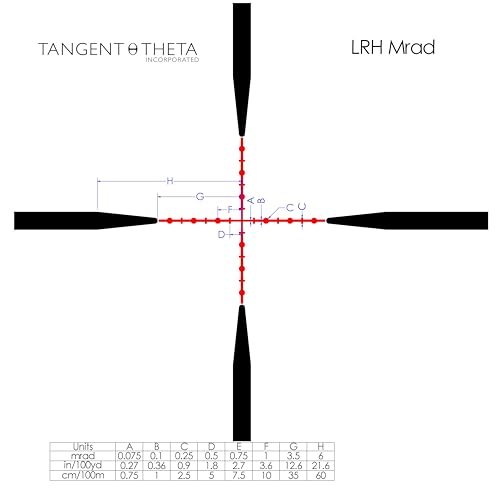
The Gen 3 XR is an MRAD-based open-center design with 0.2 MRAD subtensions, wind holds, and a dot at each full MRAD value. At magnifications above 10–12×, it’s precise and readable. Below that range, the stadia becomes difficult to use — this limitation is documented clearly in the community and has led experienced shooters to return scopes specifically because of it. If you’ll regularly shoot below 10×, look at the Gen 3 XR Fine or one of the hunting-oriented reticle options instead.
Available on: TT315H, TT315M, TT315P, TT525P (standard and AIF, Black and Coyote Brown)
Gen 3 XR Fine Reticle
Primary use: Maximum precision at high magnification — ELR competition, demanding PRS stages where target discrimination at distance matters most.
A thinner-stadia version of the Gen 3 XR, optimized for 25× and above. The same 0.2 MRAD subtension grid, finer line weight. This is the reticle for the TT735P shooter who’s using 30–35× regularly and needs the stadia to stay out of the way. Carries the same low-magnification limitation as the Gen 3 XR — the fine stadia disappears below approximately 10×. Don’t choose this for a general-purpose scope that lives anywhere in the lower magnification range.
Available on: TT525P (standard and AIF, Black and Coyote Brown), TT735P (Black)
Horus Tremor 3 Reticle
Primary use: Military and law enforcement personnel trained on the Horus system. Rapid non-dialing engagements at multiple distances using holds.
The Tremor 3 is a complex windage-elevation reference grid — outstanding for hold-based shooting across multiple distances without dialing turrets, provided you’re trained on it. The learning curve for someone who isn’t Horus-trained is real. One detail that must be stated clearly: due to Horus licensing terms, illumination on the TT’s Tremor 3 configuration is limited to the center dot and specific MRAD dots — not full reticle illumination. If you’re expecting daylight-bright full-reticle illumination, this configuration doesn’t deliver it. If you’re already running Tremor 3 on other platforms, the TT525P carries it exceptionally.
Available on: TT315P, TT525P (standard and AIF, Black and Coyote Brown)
JTAC Reticle
Primary use: Military tactical applications. Mil-based layout designed for trained personnel operating in specific tactical contexts.
A mil-based reticle with a simpler layout than the Horus grid — designed for military applications where the Tremor 3’s complexity isn’t warranted but a clean mil reference is. If you’re not operating in a military tactical context, the Gen 3 XR is a more practical choice for most precision shooting applications.
Available on: TT315P, TT525P (standard and AIF, Black and Coyote Brown), TT735P (Black)
Gen 2 MoA-ER Reticle (0.25 MOA clicks)
Primary use: Competition shooters and hunters who are trained in MOA and prefer to stay in that unit system.
This is the only MOA-click configuration in the entire Tangent Theta lineup. If you dial in MOA, shoot in MOA, and have no interest in transitioning to MRAD — this is the configuration. The 0.25 MOA click value versus the 0.1 MRAD standard on all other TT models is the mechanical distinction. Note that this reticle is available on the TT525P only, in Black, standard turrets.
Available on: TT525P (standard turrets, Black)
MRAD Reticle (LHR-MRAD — TT315H only)
Primary use: Backcountry hunting. Low-light shots at practical hunting distances.
The hunting-specific reticle on the TT315H. Bolder stadia than the competition reticles — designed to be found quickly in failing light, not to provide 0.2 MRAD holdover precision at 1,500 yards. If you’re a backcountry elk or mule deer hunter taking shots in the 300–700 yard range in conditions where a fine grid would disappear, this is the reticle the TT315H was built around.
Available on: TT315H (30mm tube, with AIF)
Summary Matrix
| Reticle | Unit | Best For | Key Limitation |
| Gen 3 XR | MRAD | PRS competition, LE precision, target above 10× | Difficult below 10–12× |
| Gen 3 XR Fine | MRAD | ELR, high-mag PRS stages | Disappears below ~10× |
| Horus Tremor 3 | MRAD | Horus-trained military/LE | Limited illumination (licensing); steep learning curve if untrained |
| JTAC | Mil | Military tactical | Narrow use-case — not ideal for general precision shooting |
| Gen 2 MoA-ER | MOA | MOA-trained competitors and hunters | TT525P only; standard turrets; Black only |
| MRAD (LHR-MRAD) | MRAD | Backcountry hunting | TT315H only; not suited for competition |
Tangent Theta Model Comparison — Full Specification Table
All five Tangent Theta models share the same optical standard and are assembled in Halifax. The differences are functional — tube diameter, magnification range, turret features, and intended use case. Use this table to identify which model fits your application, then refer to the Use Case Selector below for a more detailed breakdown.
| Specification | TT315M | TT315H | TT315P | TT525P | TT735P |
| Magnification | 3–15× | 3–15× | 3–15× | 5–25× | 7–35× |
| Objective Lens | 50mm | 50mm | 50mm | 56mm | 56mm |
| Main Tube | 30mm | 30mm | 34mm | 34mm | 36mm |
| TOOL-LESS RE-ZERO® | No | No | Yes | Yes | Yes |
| AIF Available | No | Yes | No | Yes | No |
| Click Value | 0.1 MRAD | 0.1 MRAD | 0.1 MRAD | 0.1 MRAD / 0.25 MOA* | 0.1 MRAD |
| Reticle Options | Gen 3 XR | MRAD, Gen 3 XR | Gen 3 XR, Horus Tremor 3 | Gen 2 XR, Gen 3 XR, Gen 3 XR Fine, Horus Tremor 3, JTAC, Gen 2 MoA-ER | Gen 3 XR Fine, JTAC |
| Available Colors | Black | Black | Black | Black, Coyote Brown | Black |
| Parallax Down To | ~50m | ~50m | ~50m | ~50m | 10m |
| Warranty | Limited Lifetime | Limited Lifetime | Limited Lifetime | Limited Lifetime | Limited Lifetime |
*0.25 MOA click value available exclusively on the TT525P Gen 2 MoA-ER configuration (standard turrets, Black).
Which Tangent Theta Scope Is Right for You
Four buyer types converge on TT. The right answer for each is different — and the wrong answer is expensive. These aren’t soft suggestions; they’re specific recommendations based on what each model was engineered to do.
If you’re a PRS or NRL competitor
The TT525P in Gen 3 XR or Gen 3 XR Fine is where most top competitors land, and the community data supports it — TT scopes grew from 4% to 20% of rigs among top PRS performers over five years, and 100% of those were TT525P configurations. The 5–25× range covers the full magnification spread you’ll use in a match. Standard turrets are the right call for PRS — you’re dialing between stages, and AIF adds a step you don’t want. Choose Gen 3 XR if you want the full subtension grid for windage holds; Gen 3 XR Fine if you’re shooting at the upper magnification range and want the stadia out of the way. Watch for: the Gen 3 XR below 10× is genuinely difficult to use — if your match stages regularly include close-distance targets under 10×, account for that before committing.
The TT735P is worth considering if you want maximum target resolution and shoot stages where 30–35× and close-in parallax correction (down to 10 meters) are real advantages. The 36mm tube requires specific mounts — the CADEX 36mm Ring Kit is the manufacturer-recommended solution.
If you’re military or law enforcement
The correct configuration depends on your operational distance requirements and whether turret protection matters in your environment. For law enforcement precision work at intermediate ranges — 100–500 yards — the TT315M delivers the TT optical standard in a lighter, simpler package without the Professional-series turret feature set. The 30mm tube keeps mount sourcing simple and weight down. For extended-range precision work or roles where you’ll regularly dial significant elevation, the TT315P or TT525P with Professional-series turrets is the appropriate step up.
If your operational environment involves the rifle being transported with elevation dialed — in a vehicle, slung, staged in a case — AIF is the configuration worth the price delta. The TT525P with AIF and JTAC reticle is the configuration most relevant for personnel already trained on mil-based systems in tactical applications. Personnel trained on the Horus system: the Tremor 3 reticle is available on both the TT315P and TT525P. Read the Horus Tremor 3 illumination note in the Reticle Guide before ordering.
If you’re a serious long-range hunter
The TT315H is the model built for this. Locking turrets with free-spin collars protect settings when the rifle is packed — no accidental adjustment between camp and the shot. The AIF adds another layer of protection. The MRAD hunting reticle has bolder stadia than the competition reticles, designed for low-light readability at hunting distances rather than 0.2 MRAD holdover precision at 1,500 yards. The 30mm tube keeps weight reasonable and makes ring sourcing straightforward for US buyers.
The honest comparison to an ATACR: the TT315H costs more. What you’re getting is TT glass in a configuration engineered around hunting-specific demands — turret protection, AIF, a hunting reticle — rather than a competition scope adapted to a hunting context. If your shots are under 500 yards and you’re not pushing into ELR hunting territory, the ATACR is a capable instrument. If you’re hunting open country — Western elk, mule deer, pronghorn — where a 600+ yard shot is realistic and you’re making a once-in-a-decade scope decision, the TT glass and the field-oriented turret system are the differences that hold up at distance.
The TT315P with Gen 3 XR is the alternative for hunters who want the Professional-series TOOL-LESS RE-ZERO® turrets and don’t need the hunting-specific reticle and locking collar of the TT315H.
If you’ve researched the alpha tier for months and are ready to commit
You know the comparisons. You’ve read the Sniper’s Hide threads on ZCO vs. TT, you’ve watched the OpticsThoughts evaluations, you have an opinion about the S&B PMII turrets. Here’s the specific mechanical case for TT over the alternatives you’re weighing.
Turrets: across the forum community and independent reviews, TT’s turrets are consistently described as the most tactile and precise in production. Not subjectively better-feeling — mechanically: zero shift between shots, consistent click value across temperature ranges, revolution indicators that make tracking your elevation position reliable under match conditions.
Eyebox: shooters who have run ATACRs alongside a TT describe the eyebox as the most immediately obvious difference. More forgiving at magnification, which matters in unconventional shooting positions.
Glass: at the alpha tier, optical differences are real but narrow. Where TT is consistently rated ahead in direct comparisons: depth of field, microcontrast, and edge-to-edge resolution at higher magnifications. If you’ve looked through both and can’t see a difference, that’s a legitimate outcome — buy the one whose reticle fits your application. If you’ve looked through both and felt the difference at 25×, you already know what to do.
Quick Reference
| You Are | Recommended Model | Turret Config | Reticle Starting Point |
| PRS/NRL competitor | TT525P | Standard | Gen 3 XR or Gen 3 XR Fine |
| ELR shooter / max-mag PRS | TT735P | Standard | Gen 3 XR Fine |
| LE precision marksman (intermediate range) | TT315M | N/A | Gen 3 XR |
| LE precision (extended range) / military | TT315P or TT525P | Standard or AIF | JTAC or Horus Tremor 3 |
| Backcountry hunter | TT315H | AIF included | MRAD Reticle |
| Long-range hunter, Professional turrets preferred | TT315P | Standard | Gen 3 XR |
| Informed aspirational — alpha tier decision | TT525P | Standard | Gen 3 XR |
Mount Compatibility. Which Rings Fit Which Tangent Theta Model?
Tube diameter determines your ring selection, and one model in the TT lineup sits outside the standard dimensions most US buyers have experience with.
The TT315M and TT315H run 30mm tubes. Rings at this diameter are stocked everywhere in the US — most quality mount manufacturers have multiple options in this size, and sourcing is not a concern.
The TT315P and TT525P run 34mm tubes. Less common than 30mm but well-supported among precision mount manufacturers. The CADEX Scope Ring Kit — 34mm is the manufacturer-recommended option, fitted specifically for the TT315P and TT525P. It includes an integrated recoil lug at 1.500″ height, bubble level, and High Top Rail Front. $408.85.
The TT735P runs a 36mm tube. This is the non-standard dimension. Standard 34mm rings will not fit. If you’re ordering a TT735P and haven’t sourced 36mm rings, that’s the first item to address. The CADEX Scope Ring Kit — 36mm is the manufacturer-recommended solution, built specifically for the TT735P at 1.500″ height with Extra High Top Rail Front and bubble level. $422.85. With only two in stock at the time of writing, order alongside the scope.
The Throw Lever Kit fits the TT315P and TT525P. It does not fit the TT735P — the product listing is explicit on this, and it’s worth knowing before ordering.
TT315M / TT315H — 30mm tube — standard US ring availability
TT315P / TT525P — 34mm tube — CADEX 34mm Ring Kit ($408.85) recommended
TT735P — 36mm tube — CADEX 36mm Ring Kit ($422.85) required; limited stock
Throw Lever Kit — TT315P and TT525P only — does not fit TT735P
What the Forum Record Actually Says?
This audience reads Sniper’s Hide before they read product pages. So do we. These are the documented limitations of TT scopes — stated directly because a buyer who knows them in advance isn’t surprised.
The Gen 3 XR below 10–12× magnification. This is the most documented return reason in the TT community. The Gen 3 XR is a fine MRAD grid — precise and clean at 12× and above, difficult to use below that range. One experienced former Marine 8541 who owned six Nightforce ATACR scopes returned his TT525P specifically because of this. His observation was that the ATACR is usable throughout the full magnification range; the TT Gen 3 XR is not. That’s accurate. If you need a reticle that works from 5× to 25× without degradation, the Gen 3 XR Fine has the same subtension grid with thinner stadia — but carries the same low-magnification limitation. The hunting reticle options (MRAD on the TT315H) are bolder and more usable at lower magnifications. Know which magnification range you’ll actually use before choosing.
The diopter lock knob. Forum consensus is consistent on this one: the feel of the diopter lock is the weakest tactile point on an otherwise exceptionally machined scope. The lock holds position reliably — function is not the issue. But the knob feel is inconsistent with the overall build quality, and experienced users flag it. Worth knowing before you handle one and wonder if yours is defective.
Illumination. The 11-setting illumination system takes a standard CR2032 battery and has a six-hour auto shut-off. It is not daylight-bright — this is an authentic limitation, not a framing issue. For low-light use at dawn and dusk, the illumination is useful. Don’t expect to outshine the sun with it. The Horus Tremor 3 configuration has an additional constraint: due to Horus licensing terms, full-reticle illumination is not available. Illumination on the Tremor 3 is limited to the center dot and specific MRAD dots.
What isn’t a limitation, despite what some threads suggest. The diopter lock knob feel gets mentioned alongside zero-retention concerns in some threads — these are unrelated. The zero-retention record on TT scopes in the forum community is strong. Shooters who have run them through temperature swings, transit, and extended field use consistently report the scope returns to zero. The knob feels the way it feels. The scope holds zero the way it holds zero. Don’t conflate the two.
What Precision Rifle Shooters Say About Tangent Theta
“I’ve been running the TT525P with Gen 3 XR for two seasons of PRS matches. The turrets are what you hear about — they actually are that good. I can track my elevation position mentally during a stage without looking down because every click is exactly where it’s supposed to be. Nothing I’ve used before gave me that confidence.”
Marcus T., PRS Competitor, Texas
“We evaluated several alpha-tier scopes for our unit’s precision marksmen. The TT525P with AIF and JTAC reticle was the standout for our use case — being able to protect a dialed setting during vehicle movement without sacrificing rapid access when we need it is exactly the mechanical behavior we required. The glass is what everyone says it is.”
David K., Law Enforcement Precision Marksman
“I hunted elk with the TT315H last fall in eastern Montana. Shot at 580 yards — one of the longer shots I’ve taken hunting. The scope tracked cleanly, the reticle was readable in early morning light, and resetting zero at the truck was genuinely tool-less. My previous scope required a coin every time. I didn’t realize how much I’d thought about that until I didn’t have to anymore.”
Brian H., Western Big Game Hunter
“I spent about 14 months researching this purchase. I own a Nightforce ATACR and a ZCO 4–20. The TT525P is different from both — not dramatically in glass, but the eyebox is noticeably more forgiving and the turrets are in a category by themselves. If you’ve been on the fence between TT and ZCO for a year, stop reading and make a decision. Both are exceptional. The TT turrets are better. The ZCO reticle options may fit your application better. That’s the honest answer.”
Ryan M., Long-Range Shooter, Colorado
“I shoot F-Class and the TT315P with Gen 3 XR is what I run now. At the distances I’m shooting — 600 to 1,000 yards — the image quality and depth of field at higher magnification are genuinely better than what I was running before. My prior scope cost $2,800. The TT315P cost $4,948. I noticed the difference.”
Jim C., F-Class Competitor, Pennsylvania
“Bought the TT735P Gen 3 XR Fine about four months ago. It’s shorter than my TT525P, which surprised me. At 35× the resolution on steel at 1,600 yards is noticeably cleaner than anything I’ve run before at that distance. The 36mm tube meant I had to source the CADEX rings, which added time to the order — worth flagging for anyone planning a build around this scope.”
Andrew S., ELR Shooter, Wyoming
Frequently Asked Questions
How does the TOOL-LESS RE-ZERO® system work on Tangent Theta scopes?
The TOOL-LESS RE-ZERO® (US Patent #10,591,253) resets the external turret indicator to zero without any tools. Loosen the turret cap three turns by hand, return the indicator to zero, retighten by hand. The locking force is sufficient without a coin or screwdriver. Available on TT315P, TT525P, and TT735P models.
What is the difference between the Gen 3 XR and Gen 3 XR Fine reticle on the TT525P?
The Gen 3 XR Fine has thinner stadia lines, making it better suited for 20× and above where a finer grid stays out of the way. Both use 0.2 MRAD subtensions on an FFP design and become difficult to use below 10–12×. Choose Gen 3 XR Fine if you shoot primarily at high magnification.
Do I need AIF turrets on the TT525P, or are standard turrets sufficient?
AIF (Auto Isolation Feature) turrets are needed when you can’t risk accidental elevation movement — during vehicle transport or field movement with elevation dialed. For PRS competition and most hunting, standard turrets are the better choice. AIF adds a deliberate open/close step to every adjustment, which costs time in active dialing situations.
Which Tangent Theta scope is best for PRS competition?
The TT525P with standard turrets is the scope most used by top PRS competitors — Tangent Theta grew from 4% to 20% representation among top performers over five years. Gen 3 XR or Gen 3 XR Fine are the appropriate reticle choices. The TT735P suits shooters prioritizing maximum target resolution at 30–35×.
What is the difference between the TT315M and TT315P?
The TT315M (Marksman) uses a 30mm tube and does not include TOOL-LESS RE-ZERO® or Professional-series turrets — designed for police and security marksmen at intermediate ranges. The TT315P (Professional) uses a 34mm tube with full Professional-series turret mechanics including TOOL-LESS RE-ZERO®. Both share the same optical standard.
Should I choose MRAD or MOA configuration on a Tangent Theta scope?
Most Tangent Theta models use 0.1 MRAD adjustments. The only MOA option is the Gen 2 MoA-ER reticle on the TT525P — 0.25 MOA clicks, available in Black with standard turrets only. Choose MRAD if you’re aligned with the precision rifle community standard. Choose MOA only if you’re fully trained in that system.
Do Tangent Theta scopes hold zero reliably under field conditions?
Yes. Zero-retention is consistently reported as strong across the TT community on Sniper’s Hide and Long Range Hunting Forum — through temperature swings, transit, and extended field use. Every scope is individually function-tested at the Halifax facility before shipment. Community reports of zero loss are rare and not a documented pattern.
What mounts does the TT735P require?
The TT735P uses a 36mm main tube — standard 30mm and 34mm rings will not fit. The manufacturer-recommended solution is the CADEX Scope Ring Kit — 36mm, which includes an integrated recoil lug, bubble level, and Extra High Top Rail Front at 1.500″ height. Order rings alongside the scope — stock is limited.
What warranty and customer service does Tangent Theta offer?
All Tangent Theta riflescopes carry a limited lifetime manufacturer warranty. CADEX scope ring kits carry a one-year manufacturer warranty. The Throw Lever Kit carries a limited lifetime warranty. Warranty service runs through Armament Technology Inc. and authorized dealers including EuroOptic. Customer service responsiveness is cited frequently on Long Range Hunting Forum as a standout at the alpha tier.
Is the TT315H worth the price over a Nightforce ATACR for hunting?
The TT315H is purpose-built for hunting — locking turrets with free-spin collars, AIF to protect settings during pack carry, and a bold MRAD reticle for low-light readability. The Nightforce ATACR is a capable instrument. The price difference reflects TT glass and field-specific turret engineering — not an adapted competition scope.
Built in Halifax, Tested Before It Ships
Tangent Theta’s manufacturing facility is in Halifax, Nova Scotia. That’s not a tagline — it’s the address where every scope in this lineup is assembled, adjusted, and individually function-tested before it reaches a dealer. Not batch-inspected. Not sampled from production runs. Each unit. The development team behind these scopes includes optical designers, mechanical designers, engineers, and international-class long-range marksmen — people who have been at extended range behind a rifle and who built the scope they wanted to use there.
The company distributes internationally through Armament Technology Incorporated. In the US, the primary authorized retailer is EuroOptic, which has carried TT scopes since well before the brand’s competition presence grew. That growth — from 4% to 20% representation among top-performing scopes in precision rifle competition over five years — happened without trade show campaigns or sponsored-content saturation. It happened because shooters who ran TTs in matches told other shooters what the turrets felt like and what the glass did at 25×. Forum consensus built the reputation. The scopes maintained it.
The design philosophy is deliberate and narrow. Tangent Theta doesn’t make entry-level scopes. The TT315M is the most affordable model in the lineup at $4,505 and it was engineered for police and security marksmen — not as a stepping stone to something better, but as the right tool for intermediate-range professional precision work. Every model above it adds specific mechanical capabilities for specific use cases. Nothing in the lineup is filler.
Every Tangent Theta riflescope — TT315M, TT315H, TT315P, TT525P, TT735P — carries a limited lifetime manufacturer warranty covering manufacturing defects. CADEX scope ring kits carry a one-year manufacturer warranty. The Throw Lever Kit carries a limited lifetime warranty. The Stackable Riflescope Sunshade carries a limited lifetime warranty. Warranty service is handled through Armament Technology Incorporated and authorized dealers. For warranty claims, contact the dealer where the scope was purchased as the first step.
Customer service responsiveness is a documented part of TT’s reputation at the alpha tier — cited in Long Range Hunting Forum threads alongside Zero Compromise Optics as among the most responsive in this product category. That matters at a price point where a scope problem in the field isn’t a minor inconvenience.